Role: Product Design Lead (Design Operations & Technical Product Ownership)
Scope: 450+ RM Easiteach Files / 1,500+ Interactive Activities
Tools: Adobe Creative Cloud, Jira, Confluence, RM Easiteach
Tools: Adobe Creative Cloud, Jira, Confluence, RM Easiteach
Strategic Outcome: Modernized a legacy library of 1,500+ interactive activities by eliminating Flash dependencies and integrating new brand standards. I also tripled the e-book library size by repurposing proprietary assets, delivering significant product growth with zero additional cost.
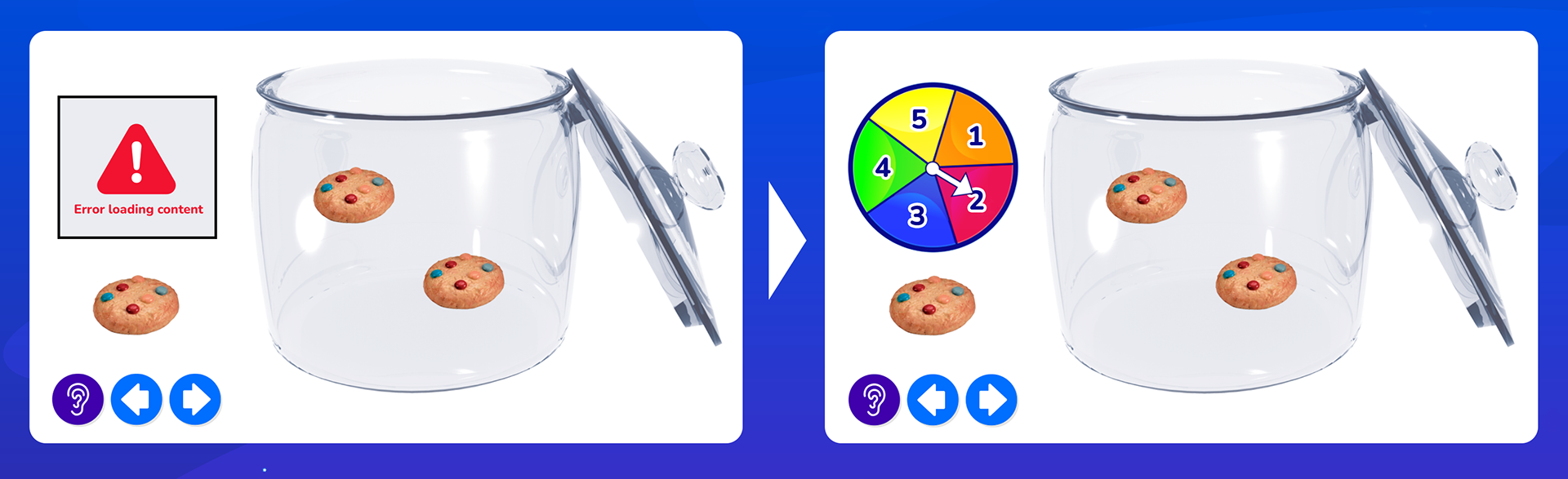
Eliminating Technical Debt: Broken Flash objects (Left) were replaced across 1500+ activities with objects built in RM Easiteach (Right).
Flash Remediation & Content Migration
The Challenge: As we transitioned our legacy whiteboard product into our SaaS ecosystem, we met a critical technical obstacle. The product's 1,500+ interactive classroom activities contained Flash elements that endangered product stability. At the same time, the lesson plans for each activity needed to be updated to conform to current pedagogical standards. This required replacing all Flash objects with native, stable alternatives and updating lesson plans across the entire library with minimal budget and no external development support.
Phase 1: Audit & Strategy
Deep-Dive Audit: With no automated tools to scan the RM Easiteach files, I performed a manual visual and functional audit of 450+ files (1,500+ individual activity slides) to identify every Flash dependency that posed a risk to product stability.
Unified Remediation Plan: I built a production roadmap that included three distinct project requirements: Flash remediation, branding updates, and lesson plan updates. By creating a single workflow for these tasks, I made sure my team of three could touch each file only once, providing the efficiency needed to hit our deadline.
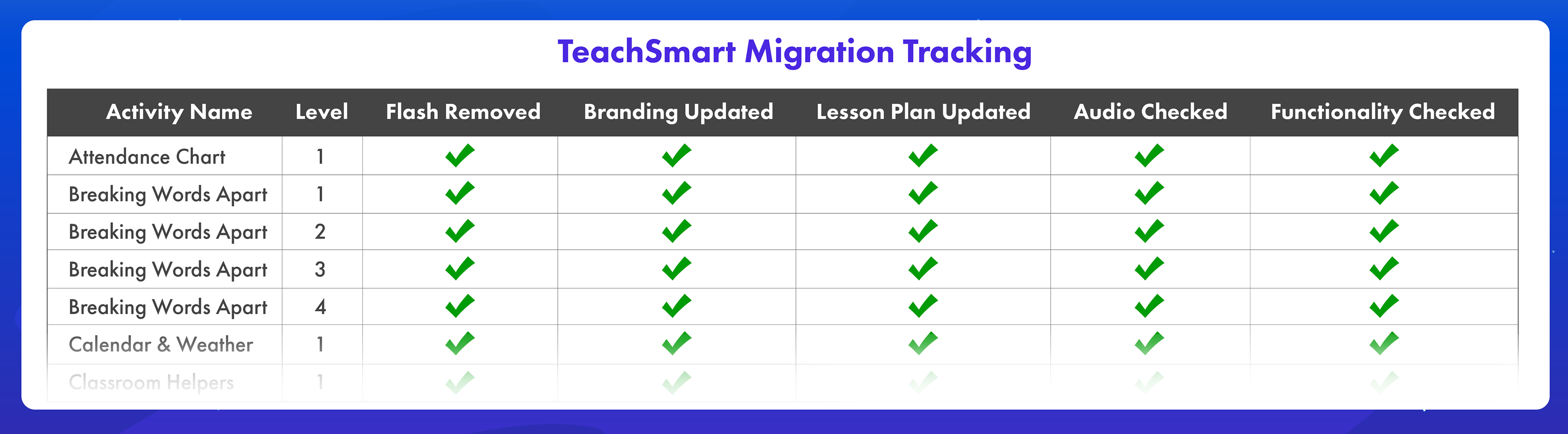
Process Standardization: To guarantee consistency across the team, I created detailed Confluence documentation with step-by-step instructions for replacing each Flash object type.
Phase 2: Execution & Leadership
Brand & Content Deployment: My team systematically updated each file, aligned branding and lesson plans, and replaced Flash objects.
The Contributor/Mentor Balance: Given our aggressive timeline, I served as both the manager and a primary contributor. By handling a significant share of the updates myself, I maintained quality control and kept my team productive despite the work's often tedious nature.
Phase 3: Strategic Asset Growth
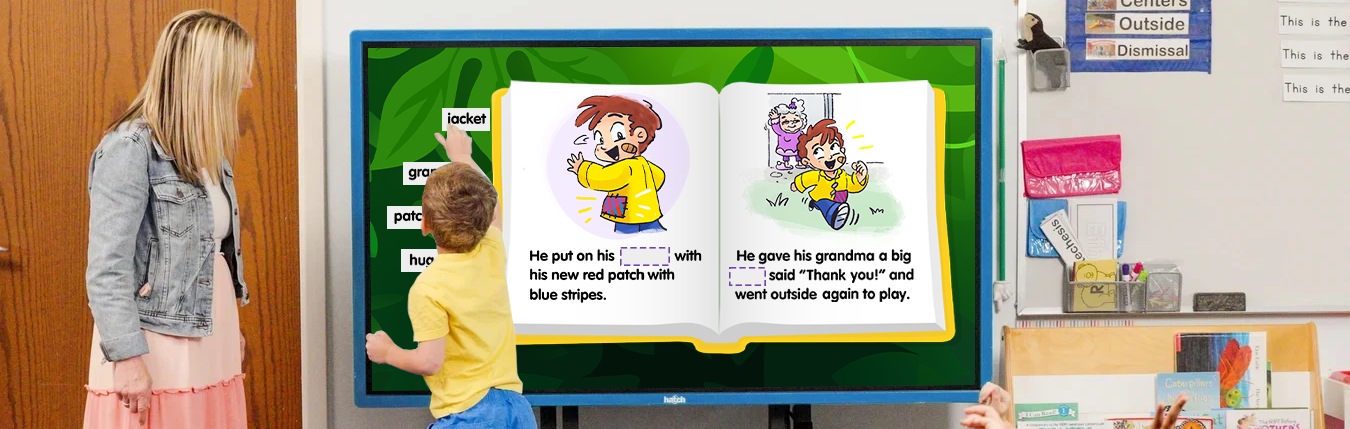
Maximizing Existing Assets: I identified an opportunity to expand the product's small e-book library without additional development costs. I proposed converting proprietary e-books created for the Ignite ecosystem's tablet product to the RM Easiteach format.
I led the conversion of 12 e-books, each in English and Spanish, into RM Easiteach files. By repurposing our own intellectual property, we tripled the size of the e-book library at no additional cost. Because the product was largely the same as the previous SaaP version, sales and marketing were hungry for any expanded features to promote.
Phase 4: Quality & Validation
The Documentation Gap: No formal specifications existed for these 15-year-old activities, so our offshore QA resources had no benchmark for what was intended to be interactive.
Leaning On Institutional Knowledge: Being the original creators of these files, the Product Owner and I served as the "human specifications." We were the only ones who understood the intended behavior behind every interaction.
Manual Validation: We co-led a rigorous manual UAT process, clicking every image and testing every trigger across all 1,500 activities. This effort provided a smooth transition for the teacher, with no loss of functionality.
Reflections
Operational Grit: While this wasn't the most glamorous project, I'm proud of how my team handled the technical crisis strategically. We audited a large legacy asset library and made meaningful updates that kept the product stable and pedagogically current within a short timeframe.
Resourcefulness: I tripled the e-book library by repurposing proprietary assets, proving that impact isn't always about a big budget; it’s about finding hidden value in your existing ecosystem and using it to drive product growth.
The Power of Documentation: This project stressed the importance of detailed, transparent documentation. Relying on institutional knowledge created a bottleneck, as the product owner and I had to perform extensive functional testing on each file.